Posts

Published Paper-2020: Automatic Extraction of Corner Points from Aerial Images Using Point-Feature Operators and Hough Transform
Image
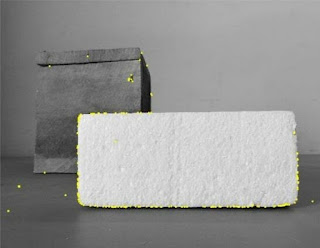
Abstract: Low-level feature extraction such as lines and points (i.e. corners), forms a fundamental step in digital photogrammetry and other fields. They supply the inputs for the photogrammetric orientation procedures; and they serve as an intermediate inputs for other processes such object recognition. With the accumulation of knowledge, the research community is in a better position to develop new generations of smart algorithms and solutions that possess a new level of maturity and understanding for the underlying challenges of automation. To this end, this paper presents an innovative approach for corner point extraction that combines the outputs from classical point feature operators with Hough Transform to generate a better hypothesis for a corner point that can be used for applications in urban areas. In particular, extracted point features were used to guide line extraction in a local neighbourhood by Hough Transform. Then the corner points that will be obtained from lines i...
Supervised Classification Using Hebbian Linear Neural Network with A Bias Term (Wo)

Image
Introduction Hebbian linear neural network with a bias term allows for a translation capability in addition to the rotation that is made using the weights parameters w 1 and w 2. Objectives Familiarize with the concept of supervised classification using linear Neural Network (Hebbian Network) with a bias term. Methodology Using MATLAB code to formulate the learning problem, by computing the net input function (U) using given values of weights and bias term., and derive the Error E, and update weights if applicable until getting the right classification. The result is tested by calculating the target values (t) of the given data. The data distribution and decision line are then plotted. Figure 1 main MATLAB Code Figure 2 main MATLAB Code - Continue Figure 3 MATLAB Code - computation function Observations/Measurements/Data sources Using the following training data set: Table 1 given data set. Pattern No. Feature X 1 Feature X 2 Target (t) 1 0.5 0.1 1 2 0.6 0.2 1 3 0.4 0.3 1 4 1.5 1.9 ...

Supervised Classification Using Hebbian Linear Neural Network

Image
Introduction Donald Hebb introduced a technique in 1949, where unlike the threshold neural it will learn. The method proposed by Hebb will update weights between neurons. This method is called Hebbian Learning. The key points of this method could be summed as follow: 1. Connections between neurons or weights are where information is stored, 2. The change in weights between two neurons is proportional to the product of their neuron output, and 3. the learning process is by repeatedly and simultaneously activating a group of weakly connected neurons.  From these key concepts the mathematical formulation of Hebbian learning was made. Objectives Familiarize with the concept of supervised classification using linear Neural Network (Hebbian Network), and build a linear classifier via training. Methodology Using MATLAB code to formulate the learning problem, by computing the net input function (U), derive the Error E, and update weights if applicable until getting the right classificati...